
How Brazil’s
Cerrado is Changing
Protected
area
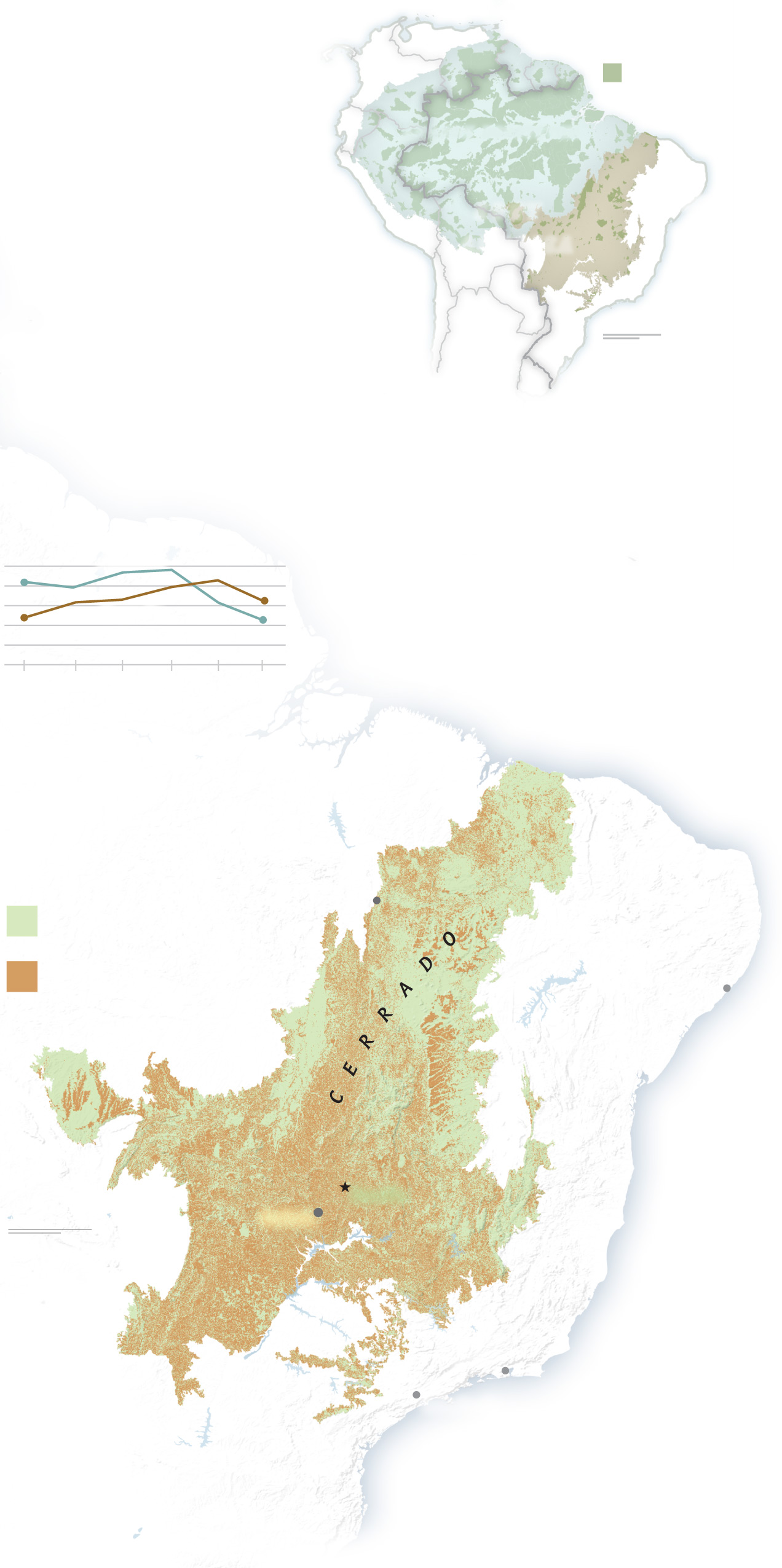
At the edge of the Amazon rainforest Brazil’s lesser known, less protected, and second largest ecosystem, the Cerrado, is rapidly transforming. Its diverse savannas, grassland, and forests house some 5,000 endemic species, whose habitats are vanishing at extreme speed.
AMAZON ECOSYSTEM
BRAZIL
CERRADO
ECOSYSTEM
south
america
500 mi
500 km
Accelerating losses
Deforestation in the Cerrado increased by 68 percent between 2022 and 2023, prompting new efforts to protect the area.
Brazilian deforestation by year
5,000
square
miles
Amazon
3,000
Cerrado
1,000
0
2019
2021
2020
2022
2023
2024
Vanishing landscape
The cerrado’s natural vegetation is being cleared to make way for cattle grazing and crops including soybeans, rice, and sugar.
Araguaína
Natural
landscape
Human-
modified
land
Recife
BRAZILIAN
HIGHLANDS
Brasília
Goiânia
200 mi
200 km
ATLANTIC
OCEAN
Rio de
Janeiro
São Paulo
Soren Walljasper, NGM Staff
Sources: Ariane Rodrigues, University
of Vermont; MAPBIOMAS;
INPE/PRODES
How Brazil’s
Cerrado is Changing
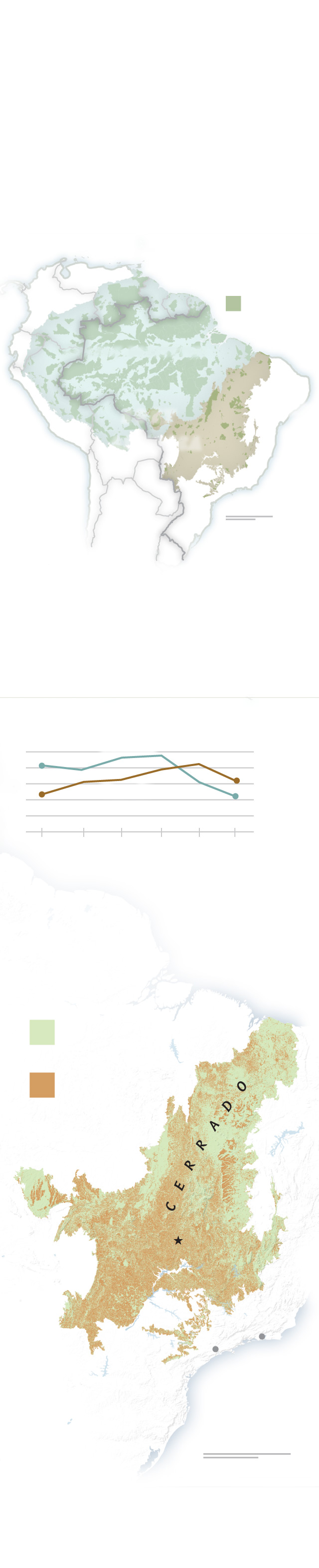
At the edge of the Amazon rainforest Brazil’s lesser known, less protected, and second largest ecosystem, the Cerrado, is rapidly transforming. Its diverse savannas, grassland, and forests house some 5,000 endemic species, whose habitats are vanishing at extreme speed.
Protected
area
AMAZON ECOSYSTEM
BRAZIL
CERRADO
ECOSYSTEM
south
america
500 mi
500 km
Accelerating losses
Deforestation in the Cerrado increased by 68 percent between 2022 and 2023, prompting new efforts to protect the area.
Brazilian deforestation by year
5,000
square
miles
Amazon
3,000
Cerrado
1,000
0
2019
2021
2020
2022
2023
2024
Vanishing landscape
The cerrado’s natural vegetation is being cleared to make way for cattle grazing and crops including soybeans, rice, and sugar.
Natural
landscape
Human-
modified
land
BRAZILIAN
HIGHLANDS
Brasília
Natal
Brasília
Rio de
Janeiro
Recife
Rio de
Janeiro
São Paulo
São Paulo
Pastures for grazing
now occupy 26 percent
of the Cerrado, up
from 17 percent in 1985.
ATLANTIC
OCEAN
400 mi
Grande Sertão Veredas N.P.
400 km
Soren Walljasper, NGM Staff
Sources: Ariane Rodrigues, University
of Vermont; MAPBIOMAS; INPE/PRODES