
Primordial view
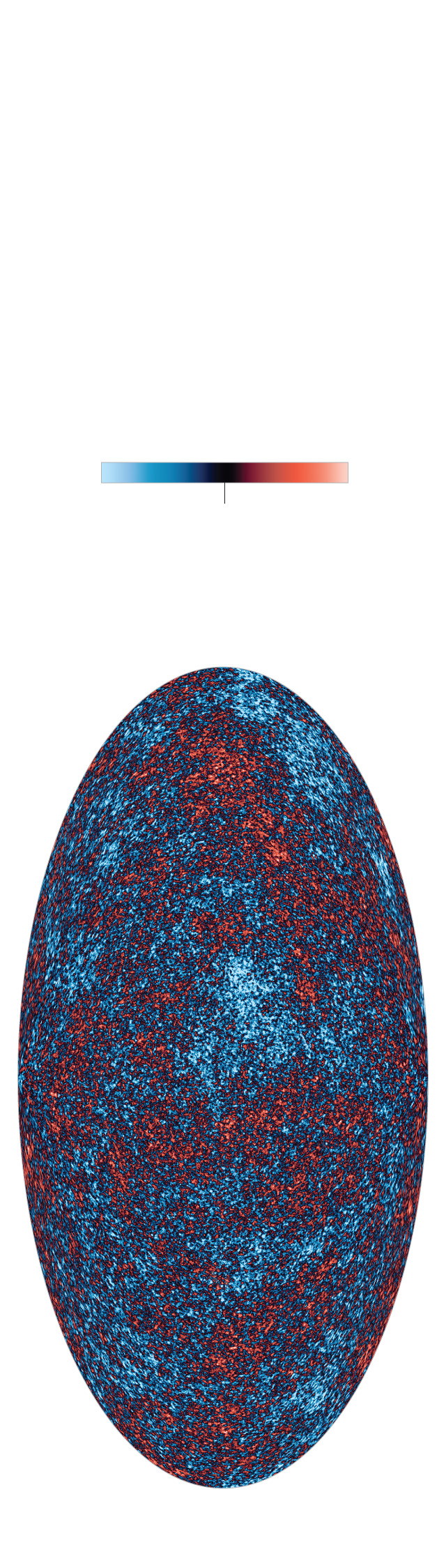
The Planck space telescope (2009-2013) surveyed the entire sky for cosmic microwave background radiation, the oldest light in the universe. This residue of the big bang dates to only 380,000 years after the event. Minute differences in temperature dot this map, indicators of where all the stars and galaxies we can see today eventually would form.
cosmic Microwave
background radiation:
WHOLE-SKY MAP
At absolute zero—0 kelvin (K)—
matter reaches the lowest possible temperature where molecules no longer transfer energy to one another.
Temperature variance
-0.0007°
+0.0007°
-454.756°F
(2.73K)
Matthew W. Chwastyk, NGM Staff
Sources: ESA/Planck Collaboration; NASA
Primordial view
The Planck space telescope (2009-2013) surveyed the entire sky for cosmic microwave background radiation, the oldest light in the universe. This residue of the big bang dates to only 380,000 years after the event. Minute differences in temperature dot this map, indicators of where all the stars and galaxies we can see today eventually would form.
cosmic Microwave
background radiation:
WHOLE-SKY MAP
Temperature variance
-0.0007°
+0.0007°
-454.756°F
(2.73K)
At absolute zero—0 kelvin (K)—
matter reaches the lowest possible temperature where molecules no longer transfer energy to one another.
Matthew W. Chwastyk, NGM Staff
Sources: ESA/Planck Collaboration; NASA