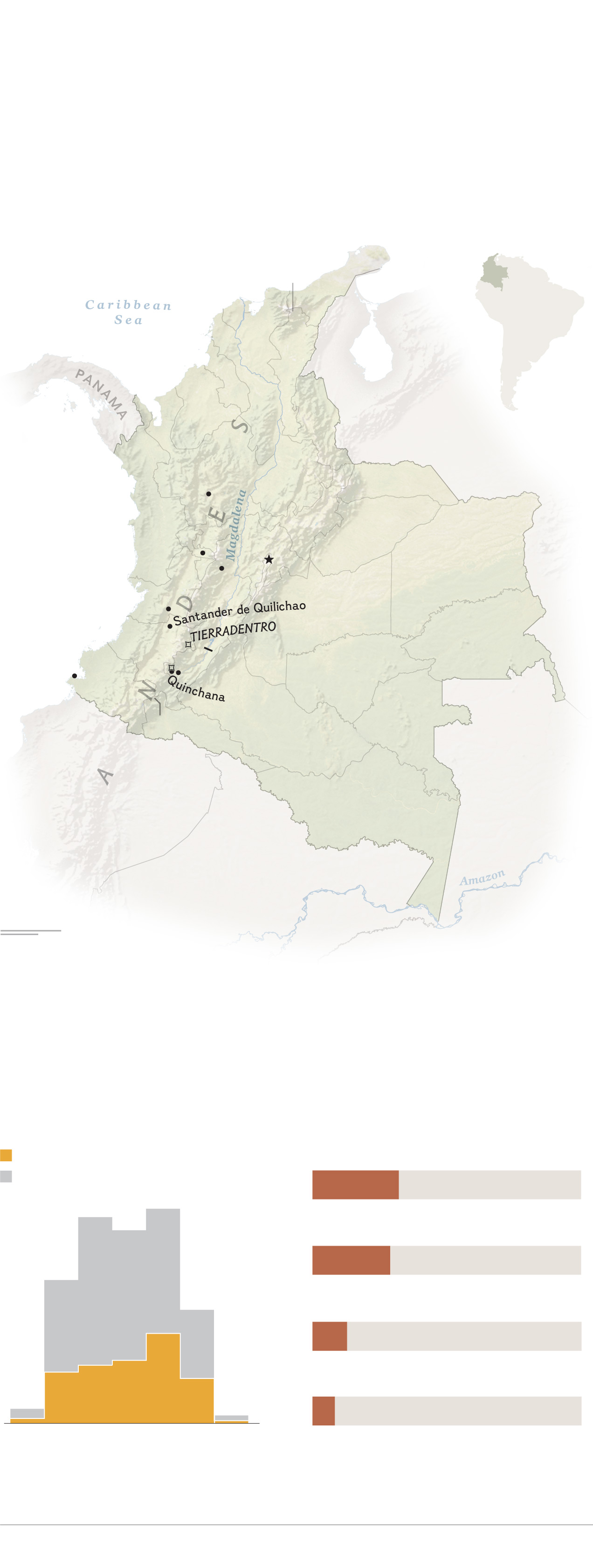
In the Crosshairs
A 2016 peace accord with rebels was meant to end bloodshed and open
opportunities in former conflict zones. But criminals and elites have
exploited resources, hoarded profits, and threatened community leaders
who challenged them. By the end of January, 1,297 activists had been killed.
Seventy percent of victims in 2021 were in rural farming areas
and mountain regions. The killers are often linked to drug cartels
trying to control coca cultivation and trafficking routes.
COLOMBIA
Sierra Nevada
de Santa Marta
SOUTH
AMERICA
CESAR
Venezuela
Medellín
Colombia
Chocó
PACIFIC
OCEAN
Risaralda
Cundinamarca
Pereira
Bogotá
Ibagué
Meta
Tolima
Cali
Valle del Cauca
Cauca
El Quimbo DAM
Huila
La Gaitana
GUAVIARE
Tumaco
San Agustín
Nariño
Colombian Massif
Amazon Rainforest
Brazil
Ecuador
Peru
100 mi
100 km
Most At Risk: Indigenous People
Killings of activists fell in 2021, partly due to better organization within civilian
defense groups and disarray in cartels and militias. Indigenous activists and
Afro-Colombian land defenders are disproportionately targeted.
Number of assassinations*
Victims, by social cause†
Indigenous/Afro-Colombian
Farming rights
Others
417 (32%)
310
298
279
Community leadership
375 (29%)
207
170
Total 842
Human rights, legal, political
166 (13%)
Coca eradication
Total 455
21
12
106 (8%)
2016
’17
’18
’19
’20
’21
’22
* From the Nov. 24, 2016, peace deal through Jan. 28, 2022
† The four social causes with the most victims are shown.
Of 1,297 fatalities, 324 were activists on more than one issue.
Christine Fellenz and Monica Serrano, NGM Staff; Erika Nunez.
Sources: Indepaz; Green Marble

In the Crosshairs
A 2016 peace accord with rebels was
meant to end bloodshed and open
opportunities in former conflict zones.
But criminals and elites have exploited
resources, hoarded profits, and
threatened community leaders who
challenged them. By the end of
January, 1,297 activists had been killed.
Seventy percent of victims in 2021
were in rural farming areas and
mountain regions. The killers are
often linked to drug cartels trying
to control coca cultivation and
trafficking routes.
COLOMBIA
SOUTH
AMERICA
Sierra Nevada
de Santa Marta
Caribbean
Sea
CESAR
Colombia
Medellín
Chocó
Risaralda
Cundinamarca
PACIFIC
OCEAN
Pereira
Bogotá
Ibagué
Valle del
Cauca
Tolima
Meta
Cali
Cauca
El Quimbo DAM
Huila
La Gaitana
GUAVIARE
San Agustín
Tumaco
Nariño
Colombian Massif
Amazon
Rainforest
Ecuador
Peru
100 mi
100 km
MOST AT RISK: INDIGENOUS PEOPLE
Killings of activists fell in 2021,
partly due to better organization
within civilian defense groups and
disarray in cartels and militias.
Indigenous activists and Afro-
Colombian land defenders are
disproportionately targeted.
Number of assassinations*
Indigenous/Afro-Colombian
Others
310
298
279
207
165
Total 830
Total 450
21
2016
’17
’18
’19
’20
2021
* From the Nov. 24, 2016, peace deal
through Jan. 28, 2022
Victims, by social cause†
Farming rights
417 (32%)
Community leadership
375 (29%)
Human rights, legal, political
166 (13%)
Coca eradication
106 (8%)
† The four social causes with the most
victims are shown. Of 1,297 fatalities,
324 were activists on more than
one issue.
Christine Fellenz and Monica Serrano,
NGM Staff; Erika Nunez.
Sources: Indepaz; Green Marble