
Today’s embattled
Afghanistan
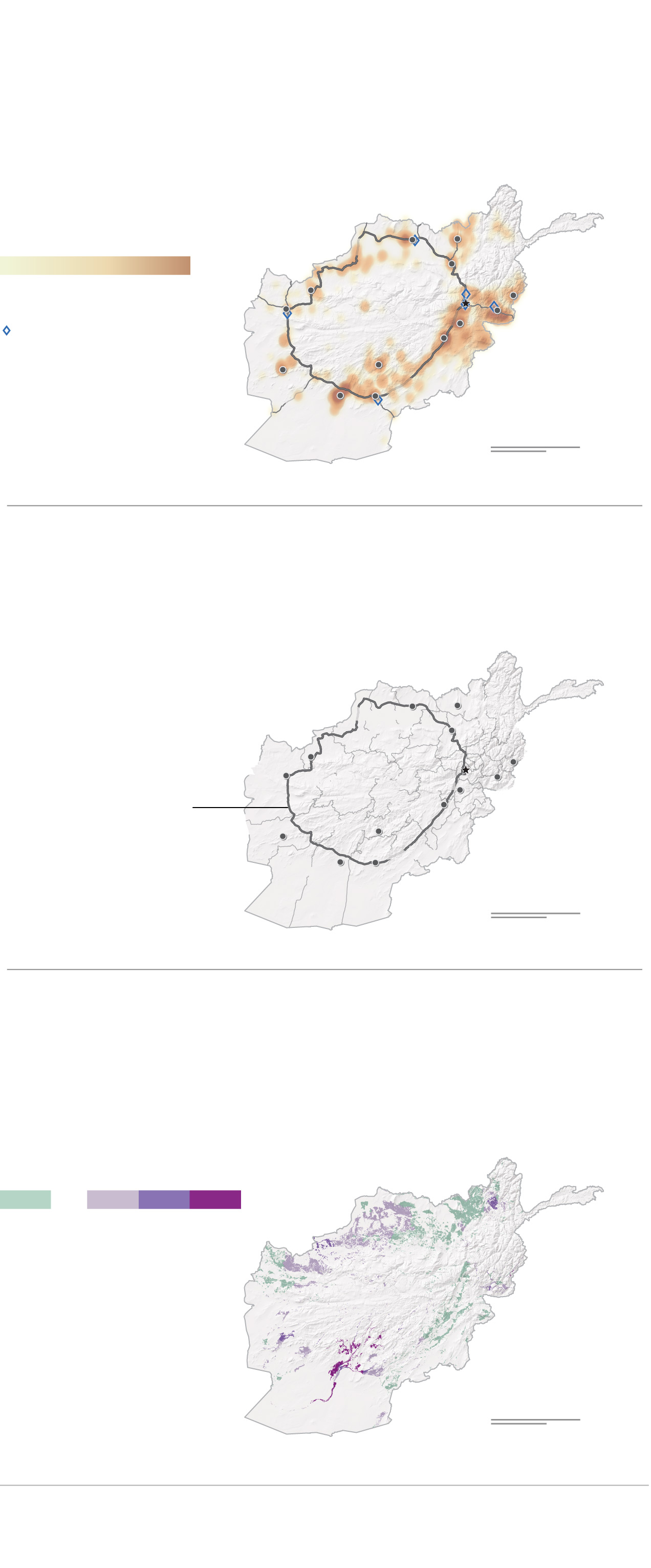
The country is controlled by the central government in Kabul, but 75 percent of Afghans live outside urban centers, far from the capital’s reach. Corruption, government ineffectiveness, lack of infrastructure, and minimal services have made it easier for the Taliban to recruit in rural areas over the past two troubled decades.
Intensity of conflict,
Jan. 2017–June 2021
Low
High
NATO base, April 2021
Kunduz
Mazar-e
Sharif
Pul-e Khumri
Asadabad
Kabul
Qalah-ye
Now
Jalalabad
Pul-e Alam
Herat
Ghazni
Tarin Kot
Farah
Kandahar
Lashkar Gah
200 mi
200 km
The road that connects
The 1,400-mile Ring Road connects cities and provides rural areas with access to markets, hospitals, and schools. A key artery for the illegal poppy trade, the highway is in disrepair from weather, lack of maintenance, and militants’ roadside bombs.
Ring Road
Kunduz
Mazar-e
Sharif
Pul-e Khumri
Asadabad
Kabul
Qalah-ye
Now
Jalalabad
Herat
Pul-e Alam
Ghazni
Tarin Kot
Farah
Kandahar
Lashkar
Gah
200 mi
200 km
Opium harvest
Afghanistan’s opium poppy harvest is estimated to supply more than 80 percent of the global heroin trade. The hardy crop grows in tough conditions and puts money in the pockets of farmers, Taliban leaders, and corrupt government officials.
Density of poppy cultivation
in agricultural land, 2020
None
Low
High
200 mi
200 km
Christine Fellenz, NGM Staff.
Lawson Parker.
Sources: Afghanistan Information Management Services; Afghanistan 2012 Land Cover Database, FAO; Armed Conflict Location & Event Data Project; Fred Kagan, Critical Threats Project; Eli Berman, Jacob Shapiro, Empirical Studies of Conflict; UNODC
Today’s embattled Afghanistan
The country is controlled by the central government in Kabul, but
75 percent of Afghans live outside urban centers, far from the capital’s reach. Corruption, government ineffectiveness, lack of infrastructuvre, and minimal services have made it easier for the Taliban to recruit in rural areas over the past two troubled decades.
Intensity of conflict,
Jan. 2017–June 2021
Kunduz
Mazar-e
Sharif
Pul-e Khumri
Asadabad
Low
High
Kabul
Qalah-ye
Now
Jalalabad
Herat
Pul-e Alam
NATO base, April 2021
Ghazni
Tarin Kot
Farah
Kandahar
Lashkar Gah
200 mi
200 km
The road that connects
The 1,400-mile Ring Road connects cities and provides rural areas with access to markets, hospitals, and schools. A key artery for the illegal poppy trade, the highway is in disrepair from weather, lack of maintenance, and militants’ roadside bombs.
Kunduz
Mazar-e
Sharif
Pul-e Khumri
Asadabad
Kabul
Qalah-ye
Now
Herat
Pul-e Alam
Jalalabad
Ring Road
Ghazni
Tarin Kot
Farah
Kandahar
Lashkar
Gah
200 mi
200 km
Opium harvest
Afghanistan’s opium poppy harvest is estimated to supply more than 80 percent of the global heroin trade. The hardy crop grows in tough conditions and puts money in the pockets of farmers, Taliban leaders, and corrupt government officials.
Density of poppy cultivation
in agricultural land, 2020
None
Low
High
200 mi
200 km
Christine Fellenz, NGM Staff. Lawson Parker.
Sources: Afghanistan Information Management Services; Afghanistan 2012 Land Cover Database, FAO; Armed Conflict Location & Event Data Project; Fred Kagan, Critical Threats Project; Eli Berman, Jacob Shapiro, Empirical Studies of Conflict; UNODC